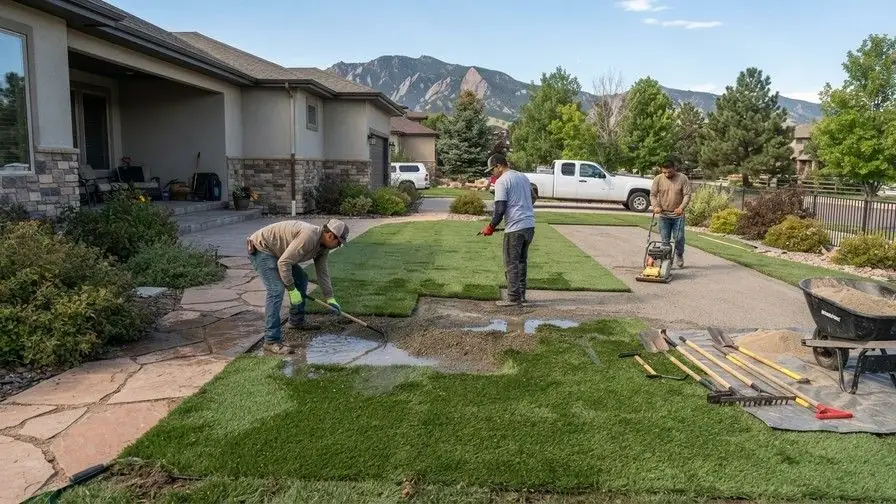
Turf is supposed to drain, so a puddle can be worrying. The good news: the turf itself is rarely the problem, so the fix is often cheaper than you fear. Here is how Lakewood homeowners can narrow down why water is pooling.
What makes water pool on my artificial turf?
Usually because of what is underneath. The base may have settled. The ground may not have been graded to shed water. Clay soil may drain slowly. A downspout may send more water than the area can absorb. A blocked or raised edge can trap water too. A simple hose test and a look at where the water comes from often narrow down the cause before anyone pays to lift turf.
Begin With a Hose Test
Run a hose slowly over the problem spot and watch. Does water sink in and then come back up lower down? Does it sit in one dip? Does it run to a raised edge and stop? Each clue points to a different cause.
Note when it happens. Pooling only in big storms suggests the base is overwhelmed. Pooling after light rain points to a low spot.
Check Outside Water Sources
Downspouts, neighbors' yards and sprinkler zones that never got capped can all send extra water onto turf. A downspout extension or sprinkler adjustment can fix it without touching the turf.
Check the gutters for overflow as well. Water spilling off a roof edge can hit the same spot every time.
When the Base Is to Blame
Once outside water is ruled out, the likely culprit is a base that sank or was built too shallow for your soil. The fix is usually to fold back the turf, add rock, pack it down and fasten the turf again. Bigger problem areas may call for regrading or adding a drain.
Fixing it early keeps standing water from softening more of the base.
Finding the Cause
Most drainage problems have an obvious cause once you look closely. For a check in person, we can match you to an independent area turf provider serving Lakewood.