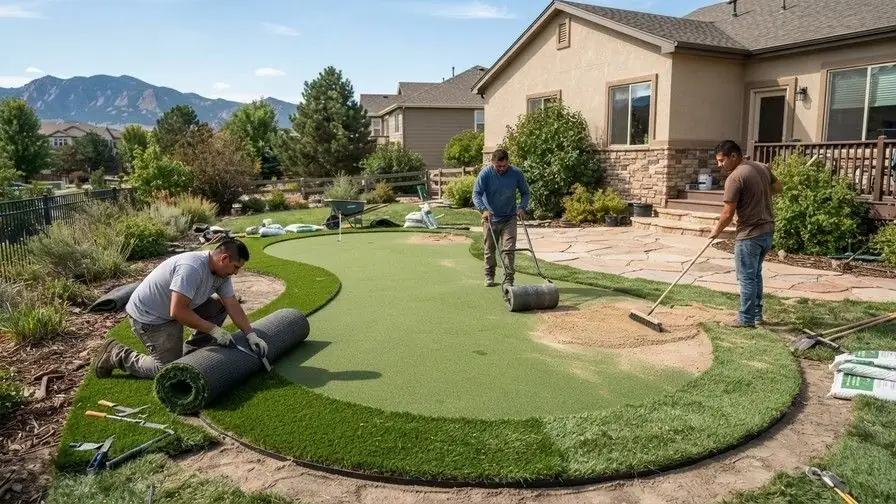
A backyard putting green is among the most enjoyable turf projects and among the most technical. The way it rolls is set by decisions made long before anyone putts on it, and those decisions set the cost too. If a green is on your wish list for a Lakewood backyard, this guide covers what goes into building one and the questions worth asking.
What are the parts of a backyard putting green?
Four layers of decisions. Underneath is compacted rock, shaped into gentle rolls. On top of that goes dense, short putting turf, and sand worked into it controls how fast the ball runs. Each hole is set flush with the surface, and a ring of taller fringe usually borders the whole thing. How big and what shape depend on the kind of practice you want, and size moves the price more than anything. A local provider can lay out a few versions on your lawn and show how each one plays, so you can decide how much green is worth paying for.
Start With How You Practice
Short putts, long lag putts and reading breaks each want a slightly different green. To drill three- and four-footers, a compact green with one or two cups does the job. For lag practice, length matters more than width.
Breaks come from contours in the base. If you want to practice reading putts, ask for gentle slopes running different ways. A green shaped too aggressively can be more annoying than fun. Most backyard greens go for subtle movement.
Picking Putting Turf and Infill
Putting turf is cut shorter and packed tighter than lawn turf, typically made from nylon or polyethylene so the ball rolls true. Each product has its own speed and handles chip shots in its own way. If chipping is part of your plan, ask for a surface that holds a shot.
Sand gets brushed down between the fibers to stiffen the surface and control how fast it rolls. Adding sand and brushing more generally makes it play firmer. The provider can show you how they set up a green and how you can change the feel down the road.
Setting Cups and Fringe
Where the cups go decides how the green plays. Spread them across different slopes and one green gives you plenty of variety. Cups sit in sleeves set into the base so they stay level. Pull the flags when you want a clean look.
A fringe of longer turf frames the green, slows balls that roll off and blends the green into the yard. Some homeowners add a small chipping area or tee mat close by. Plan extras early so the whole layout works together.
From Plan to First Putt
Think about where the green goes, how big it should be and how you like to practice. Those answers shape the design. When you are ready, we can match you to an independent provider near you in Lakewood who builds backyard putting greens.