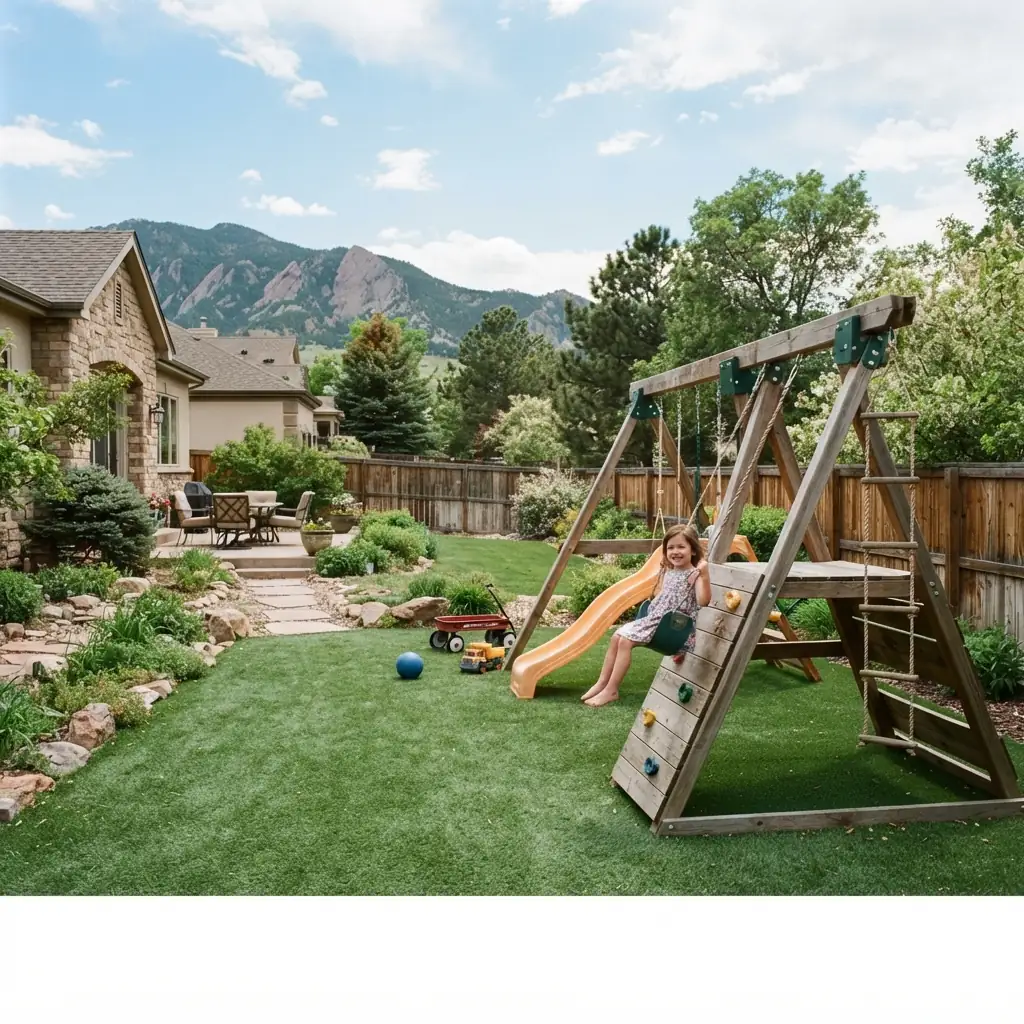
In plenty of Lakewood yards, one corner gets so much use that grass simply quits. Swings, trampolines and backyard games scrape it to bare soil, and every rainstorm turns that soil into mud. Astroturf, a word many people use for all synthetic grass, solves this with a surface that looks just as green in late summer as it did in spring. We put you in touch with an independent local provider who installs play area turf and can go over padding, drainage and heat with you.
What a Play Surface Needs
Play areas are harder on turf than front lawns. Kids run, slide and fall, often in the same few spots. The surface has to be soft and level, with no hard edges to catch a foot. Most play installs pair a shorter, dense turf with a foam or rubber pad underneath where falls happen, like under swings or at the bottom of a slide. Ask the provider how thick that pad should be.
The turf itself counts too. Look for blades that spring back after being stepped on, backing with lots of drainage holes and infill that does not get tracked into the house. The provider can bring samples so you can feel the gap between soft landscape turf and a tougher sports-style product before you pick.
The Base Under a Play Yard
What sits under the turf decides how well the play area lasts. The old lawn comes out along with a few inches of dirt, and in its place goes a crushed rock layer that is shaped and packed tight. Rain and snowmelt soak through it rather than pooling. The turf ends up on a solid, flat foundation, so you do not get waves or low spots.
The perimeter is anchored to a solid edge such as a strip of pavers, bender board or the side of a patio. Where a swing set or playhouse stands on the turf, the installers cut openings and add anchors so the play set stays firm and the turf stays smooth around every leg.
Heat, Cleaning and Day-to-Day Care
Synthetic turf warms up in direct afternoon sun, so plan for it in a play yard before you buy. Lighter infills, shade from a sail or tree and a quick hose-down before play all help keep the surface comfortable. The provider can explain which products run cooler, what they cost compared with standard turf, and where shade would do the most good in your particular layout.
Daily care is easy. Pick up leaves and toys, rinse spills and brush the blades now and then to keep them upright. Once or twice a year, check the edges and add infill in the busiest lanes. No mowing, no fertilizer, no reseeding bare spots.
Planning the Play Area
Before you get in touch, draw a rough map of the play area, mark where the play set will stand and flag any soggy spots. That gives the provider a jump start at the visit. We put Lakewood families in touch with an independent turf provider, and the estimate is arranged directly with them. Share some details about the space and we will forward them.