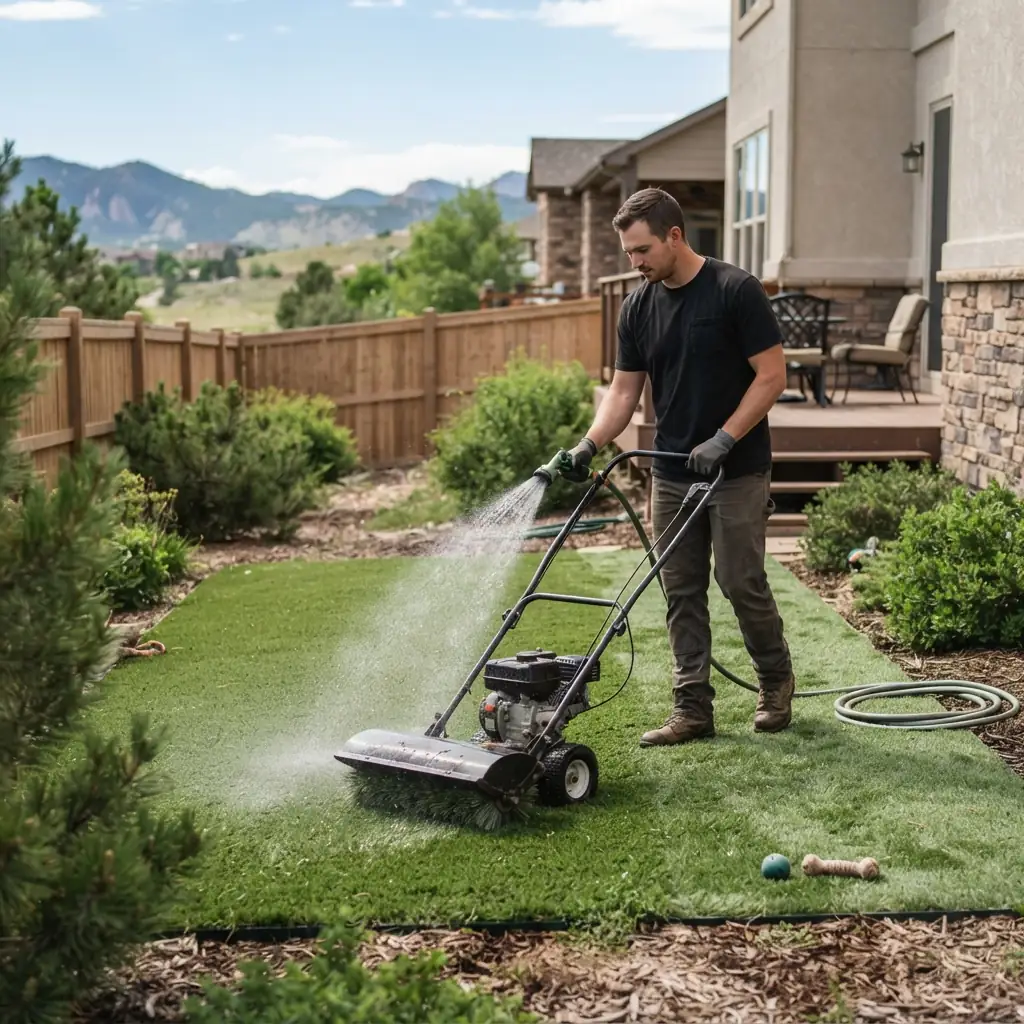
Synthetic grass skips the mowing, but it still gathers dust, pollen, leaves and, where dogs go, odor. Traffic paths can flatten over time. A thorough clean brings it back. We connect Lakewood homeowners to an independent area turf provider who does deep cleaning and odor care.
How to Tell Turf Needs Cleaning
Smell is the giveaway. Dog runs and favorite potty spots can hold odor, especially in warm, dry stretches with little rain. Other signs: fibers that look flat or shiny, leaves and seeds stuck deep in the blades, and spots that feel hard instead of springy.
Turf near trees or fences collects more debris. Turf beside patios picks up tracked dirt and dropped food. If it still looks tired after you hose it off, a deeper clean is usually next.
What a Cleaning Visit Covers
Most providers blow or rake off surface debris first, then rinse to loosen fine dirt. Pet areas get an enzyme or turf-specific cleaner that soaks into the backing and infill, where odor sits. Stains from sap, grease or drinks get spot treated.
Then a power brush or stiff rotary broom lifts the fibers against the grain and evens the infill. On older turf, the provider may point out thin infill, loose seams or edges that need work. You can decide to handle them now or later.
Keeping Turf Fresh Between Cleanings
Pick up solid pet waste every day. In warm weather, hose down the main potty spot every few days. Brush lightly every month or two to keep fibers upright. Clear leaves before they pile up and break down into the infill.
Homes with several dogs or lots of play often book a deep clean a few times a year. Lightly used yards may need just one each spring. The provider can suggest a schedule based on your use.
Request a Turf Cleaning
Tell us where the turf is, about how big the area is and whether pets use it. We hand it to an independent area turf provider serving Lakewood. They will confirm details and give you a written quote.